Better for Roof Insulation: Phenolic Insulation Board or XPS Board
As energy efficiency becomes a global construction priority, the selection of the right roof insulation material is more important than ever. Two popular options on the market today are phenolic insulation board and extruded polystyrene (XPS) board. While both materials offer thermal performance, they differ significantly in key areas that can impact building safety, energy use, and long-term durability.
Thermal Efficiency
One of the main reasons to insulate a roof is to reduce heat loss and control indoor temperatures. In this regard, phenolic insulation board stands out. With an exceptionally low thermal conductivity (typically 0.020–0.023 W/m·K), phenolic foam provides excellent insulation using less thickness. XPS also offers good thermal performance, but its conductivity is higher — around 0.030–0.035 W/m·K — meaning thicker layers are required to achieve the same U-value.
Fire Performance
This is where phenolic insulation clearly has the advantage. Phenolic boards are fire-resistant, producing minimal smoke and toxic gases. As a thermoset material, they do not melt or drip in high heat, making them ideal for applications where fire safety is critical. XPS, a thermoplastic, melts and releases dense smoke when exposed to flame. In many cases, XPS requires additional protective layers to meet fire codes.
Moisture Resistance
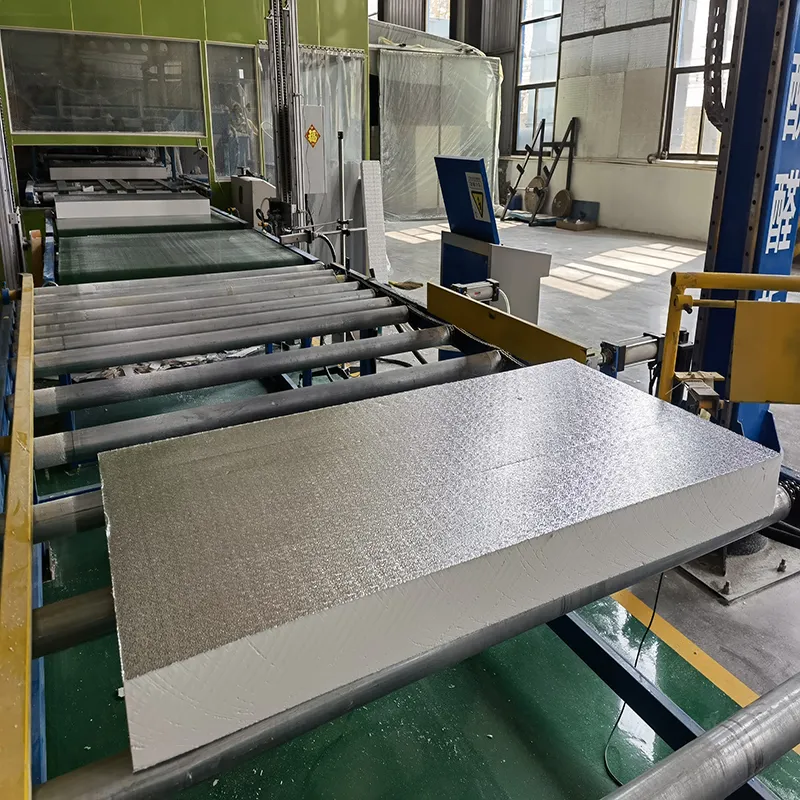
Both materials offer closed-cell structures that resist water absorption. However, XPS is often more moisture-tolerant over time in below-grade or inverted roof systems. Phenolic insulation board is generally used with a protective facing, such as aluminum foil, to enhance vapor control in exposed roof applications.
Environmental Impact
Phenolic insulation is increasingly favored in green building projects due to its high energy efficiency and lower thickness requirements, which reduce material use. Many phenolic products are manufactured with low Global Warming Potential (GWP) blowing agents. XPS has improved in this regard, but historically, it has had a higher environmental footprint due to its manufacturing process.
Installation and Durability
Both materials are lightweight and easy to install, but phenolic insulation’s thinner profile can offer an edge in tight spaces or when minimizing roof buildup is necessary. XPS is generally more durable under heavy mechanical loads, making it suitable for parking decks or rooftop gardens.
Head-to-Head Comparison Table
| Feature | Phenolic Insulation Board | XPS Board |
|---|---|---|
| Thermal Conductivity | 0.020–0.023 W/m·K | 0.030–0.035 W/m·K |
| Fire Performance | Excellent, minimal smoke | Melts and dense smoke |
| Moisture Resistance | Good, with facing | Excellent for long-term exposure |
| Environmental Impact | Low GWP blowing agents | Higher environmental footprint |
| Compressive Strength | High | Very High |
| Installation Thickness | Thinner profile | Thicker layers needed |
| Durability Under Load | Good | Excellent |
Which Should You Choose?
The choice between Phenolic Insulation Board and XPS Board depends on your project’s specific needs:
Choose Phenolic Insulation Board if you need the best possible thermal performance, superior fire resistance, and reduced material thickness for tight spaces.
Choose XPS Board if you require high compressive strength, long-term moisture resistance, and a budget-friendly solution for areas like rooftop decks or green roofs.


Comments
Post a Comment